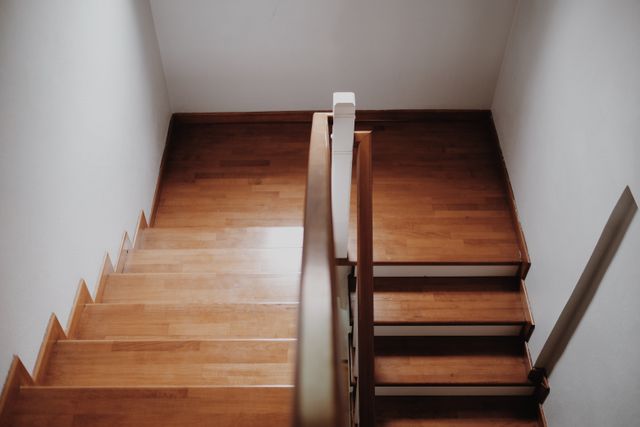
Many household falls involve walking surfaces: cluttered floors, loose rugs, dim staircases, and missing or unsteady handrails. Clearing paths, securing or removing throw rugs, fixing stairs and lighting, and wearing non-slip footwear are among the highest-impact changes a household can make — no full renovation needed. Injury estimates associated with floors, stairs, or rugs can highlight where to look first; they cannot prove a product caused a fall. This is practical home guidance, not medical care. For a complete room-by-room map (bed, chairs, kitchen, bathroom), see our whole-home fall prevention checklist. For wet rooms, see our bathroom safety guide.
Why Floors and Stairs Show Up So Often
Floors and stairs are the surfaces people walk on most often, so it is not surprising that they appear frequently in injury data. In NEISS-based views, floors and stairs often lead among product categories associated with injuries to older adults, with rugs and carpeting also appearing regularly.
That frequent appearance reflects how often people encounter these surfaces, not proof that a surface caused a fall. A person who stumbles because of poor balance may do so on a floor, but the floor did not cause the stumble — it is where the fall happened.
This distinction matters when reading injury numbers. For a plain-English explanation of how the CPSC's NEISS database works — including what "associated with" means — see What Is NEISS?
Stairs & Steps Checklist (Indoors and Outdoors)
These points align with guidance from the National Institute on Aging and the CDC STEADI program.
- Keep stairs clear of items. Shoes, books, packages — nothing belongs on a step, even temporarily.
- Repair uneven or broken steps as soon as you notice them. A single uneven step is enough to catch a toe.
- Install handrails on both sides, securely fastened and running the full length of the stairs.
- Place a light at the top and bottom, with switches reachable from both landings.
- Ensure stair carpet is firmly attached, or use non-slip treads on bare wood or concrete.
- Use slip-resistant surfaces on outdoor steps where possible, especially in wet or icy weather.
A habit worth building
When carrying items up or down stairs, keep one hand on the handrail. If both hands are full, the load is too much for the stairs — set something down or make a second trip.
Floors, Hallways & Rugs Checklist
Walking surfaces inside the home are where most daily steps happen. These changes take minutes and compound over time.
- Clear clutter and cords from walkways. A phone charger across a hallway is a trip hazard waiting to happen.
- Secure wall-to-wall carpet if it is loose or buckling.
- Remove small throw rugs, or secure them with non-slip backing or double-sided tape (STEADI recommendation).
- Use non-slip strips on smooth tile or wood floors where a slick surface is hard to avoid (NIA recommendation).
- Do not walk on freshly washed floors until they are completely dry.
- Light hallways and night paths. Motion-activated or plug-in nightlights along the bed-to-bathroom route help at night.
Wet floors
Bathrooms and kitchens have their own wet-floor risks. For bathroom-specific guidance — grab bars, non-slip mats, and shower setup — see our bathroom safety checklist for seniors.
Footwear on Walking Surfaces
What you wear on your feet matters as much as what is under them.
- Wear non-slip, supportive shoes rather than going barefoot or in loose slippers.
- Avoid socks alone or smooth-soled slippers on stairs or hard floors (NIA tip).
- Replace worn soles — traction wears down over time.
This is a brief note, not a full footwear guide. The point is simple: good shoes are a walking-surface intervention.
How This Fits with Our Other Guides
This page is intentionally narrow: walking surfaces only. For broader coverage, two other guides pick up where this one ends:
- Fall Prevention at Home — the complete room-by-room checklist covering bed, chairs, kitchen, and more. Floors and stairs are one piece of the larger picture.
- Bathroom Safety for Seniors — wet floors, grab bars, and shower setup. The bathroom's slippery surfaces deserve their own checklist.
For context on how the injury data behind these recommendations is collected, see What Is NEISS?
How SafeCheck Home Fits In
SafeCheck Home helps families explore injury patterns and build checklists that cover the surfaces walked on every day.
- Category search — look up floors, stairs, rugs, and other categories to explore injury context with clear caveats.
- Room-by-room checklists — create safety checklists that include walking surfaces alongside other risks.
- Family member profiles — set the age of the person you are caring for to receive age-tailored safety alerts.
Core features are free on the SafeCheck Home homepage. For details on how we handle your data, see our Privacy Policy.
Related Guides
Frequently Asked Questions
Should we remove all throw rugs?
Not necessarily, but every throw rug should be either secured with non-slip backing or double-sided tape, or removed. A rug that slides or has a curled edge is a common trip hazard. If the rug is decorative, consider replacing it with one that has a non-slip backing.
Do we really need handrails on both sides of the stairs?
Both the NIA and CDC STEADI recommend handrails on both sides of the staircase, securely fastened and running the full length of the stairs. This gives a person something to hold regardless of which hand is free, and is especially useful when carrying items.
Why do floors and stairs show up so often in injury estimates?
Floors and stairs are walking surfaces that people use constantly, so more opportunities exist for a fall to happen near them. In NEISS-based views, floors and stairs frequently lead among product categories associated with injuries to older adults. Frequent appearance reflects how often people encounter these surfaces, not proof that the surface caused the fall.
Is this the same as the whole-home fall prevention checklist?
No. The whole-home checklist covers room by room — bed, chairs, bathroom, kitchen, and more. This page goes deep on walking surfaces only: stairs, floors, hallways, rugs, footwear, and lighting along the path. Use both together for full coverage.
How does SafeCheck Home help with floor and stair risks?
SafeCheck Home lets families search product categories — including floors, stairs, and rugs — to explore injury context, and build room-by-room safety checklists that cover walking surfaces. Core features are free.
Sources
- National Institute on Aging — Preventing Falls at Home: Room by Room
- CDC STEADI — Check for Safety (PDF)
- CDC STEADI — Stopping Elderly Accidents, Deaths & Injuries
- SafeCheck Home — What Is NEISS?
- SafeCheck Home
This article is for informational purposes only. It is not medical advice and does not guarantee fall prevention. Always consult a qualified healthcare provider for specific medical or mobility concerns.