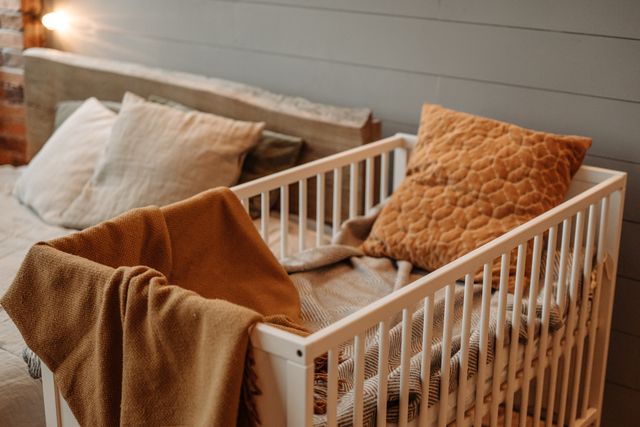
Safer infant sleep starts with a firm, flat sleep surface in a crib, bassinet, play yard, or bedside sleeper that meets current standards — with the baby on their back, alone, and covered only by a tightly fitted sheet (bare is best). Soft bedding and a cluttered sleep space add risk. This page is a practical checklist based on public CPSC guidance, not medical care. Nursery product injury estimates, where shown, describe injuries associated with products and cannot by themselves prove causation.
Safe Sleep Basics: Alone, on the Back, in a Crib — Bare Is Best
The CPSC's safe sleep guidance for babies rests on a short list of principles. They are simple to state, and they matter most in the first year:
- Alone. The sleep space belongs to the baby — no other people, pets, or soft objects.
- On the back. Place the baby on their back for every sleep, naps and nights alike.
- On a firm, flat surface. A crib, bassinet, play yard, or bedside sleeper that meets current federal standards.
- Bare is best. Nothing in the sleep space except a tightly fitted sheet over a firm mattress.
These principles come from the CPSC's Crib Safety Tips and related public guidance. If you have questions about your baby's specific health situation, your pediatrician is the right person to ask.
A note about swings, rockers, and car seats
If your baby falls asleep in a swing, rocker, bouncer, or car seat, CPSC guidance recommends moving them to a firm, flat, approved sleep surface as soon as possible. These products serve a purpose while the baby is awake and supervised, but they are not designed for routine sleep.
Crib Hardware & Setup Checklist
Whether your crib is new or handed down, these checks take only a few minutes. They are drawn from the CPSC's crib safety guidance.
- Firm mattress, snug fit. The mattress should not leave a gap wider than two fingers between itself and any side of the crib.
- Slat spacing. Slats should be no more than 2⅜ inches apart (about the width of a soda can) so a baby's body cannot slip through.
- No missing or loose hardware. Check bolts, screws, and brackets. A wobbly crib is not a safe crib.
- No corner posts over the mattress line. Protruding corner posts can catch clothing.
- No cutout designs in headboard or footboard where a baby's head or limbs could get trapped.
- If the crib has a mesh side, the mesh should be intact with no tears or holes, and securely attached.
- Tightly fitted sheet only — designed for the mattress size. Nothing else in the crib.
- Place the crib away from windows, cords, and wall decorations that a growing baby could reach.
For full details on each of these checks, the CPSC's Crib Safety Tips page is the authoritative source.
What Not to Use for Sleep
Some products that look cozy or convenient are not aligned with CPSC safe sleep guidance. This list is worth knowing before your baby arrives — or before well-meaning gifts fill the nursery.
- Pillows, quilts, comforters, and sheepskins in the sleep space
- Pillow-like bumpers or any padding attached to crib sides
- Stuffed animals and soft toys left in the crib during sleep
- Inclined sleepers and products not designed or marketed for safe infant sleep
- Positioners, wedges, and other devices meant to hold a baby in a particular sleep position
Some of these items may be useful during awake, supervised time — a soft toy on a playmat, for example — but they do not belong in a sleep space. If a product's sleep-safety status is unclear, the CPSC's Childproofing Your Home guide and its nursery product pages are good places to check.
The shortest version: if it is soft, it does not go in the crib.
How Nursery Injury Data Fits In
The checks in this checklist are not guesses. They reflect patterns that appear in public injury surveillance data — including the CPSC's NEISS database, which tracks injuries associated with consumer products treated in U.S. hospital emergency departments.
Nursery products — cribs, mattresses, bassinets, play yards — are among the product categories tracked by NEISS. When researchers and safety engineers look at these patterns, the findings inform the hardware standards and setup guidance you see on this page.
We describe these patterns qualitatively rather than citing specific numbers, because a number without context can mislead. Injury counts describe what happened near a product, not what a product did. And because NEISS data comes from a probability sample of hospitals, the national estimates carry statistical uncertainty.
If you want to understand how NEISS works — how a sample of hospitals produces national estimates, what "associated with" means, and how it differs from recalls — read our guide: What Is NEISS? How to Read CPSC Product Injury Numbers.
How SafeCheck Home Fits In
SafeCheck Home is designed to help parents work through checklists like this one, room by room.
- Nursery category search — look up cribs, mattresses, bassinets, play yards, and other nursery product categories to explore injury context with clear caveats.
- Room-by-room checklists — create a nursery checklist (and one for every other room) with suggested risk areas based on injury data patterns.
- Family member profiles — set your child's age to receive age-tailored safety alerts.
Core features are free on the SafeCheck Home homepage. For details on how we handle your data, see our Privacy Policy.
Related Guides
- What Is NEISS? How to Read CPSC Product Injury Numbers — understand the data behind product safety.
- Bathroom Safety for Seniors — a fall-prevention checklist for older adults in your household.
- Childproofing Checklist: Room by Room — whole-home safety for mobile babies and toddlers.
- High Chair Safety Checklist — safer mealtimes for babies & toddlers.
- Stroller & Carrier Safety Checklist — safer outings with baby.
- Is SafeCheck Home Free? — pricing, data collection, and who the app is for.
- SafeCheck Home — search injury data by product category, build room-by-room checklists, and make informed decisions for your family.
Frequently Asked Questions
What makes a crib safer for infant sleep?
A crib is safer when it meets current CPSC standards, has a firm mattress that fits snugly with no gaps, has no missing or loose hardware, and contains nothing except a tightly fitted sheet. The baby sleeps on their back, alone, on a firm flat surface — often summarized as "bare is best."
Should I use bumpers, pillows, or blankets in the crib?
CPSC guidance recommends against pillows, quilts, comforters, sheepskins, and pillow-like bumpers in a baby's sleep space. Soft items can pose a suffocation risk. A tightly fitted sheet on a firm mattress is all a crib needs.
Can my baby sleep in a swing, rocker, or car seat?
CPSC guidance recommends moving a baby to a firm, flat, approved sleep surface — such as a crib, bassinet, play yard, or bedside sleeper — as soon as possible if they fall asleep in a swing, rocker, bouncer, or car seat. These products are not designed for routine sleep.
What do CPSC nursery injury numbers actually mean?
NEISS estimates describe injuries associated with nursery products that were treated in U.S. hospital emergency departments. "Associated with" means the product was present or in use — it does not prove the product caused the injury. The estimates come from a probability sample of hospitals, weighted to produce national figures.
How does SafeCheck Home help with nursery safety?
SafeCheck Home lets families search nursery product categories to explore injury context, and build room-by-room safety checklists including a nursery checklist with suggested risk areas. Core features are free.
Sources
- CPSC — Crib Safety Tips
- CPSC — Childproofing Your Home
- SafeCheck Home — What Is NEISS?
- Is SafeCheck Home Free? — pricing, data collection, and who the app is for.
- SafeCheck Home
This article is for informational purposes only. It is not medical advice, a SIDS diagnosis resource, or a substitute for professional guidance from your pediatrician. Always follow the instructions that come with your products and consult qualified healthcare providers for your baby's specific health needs.