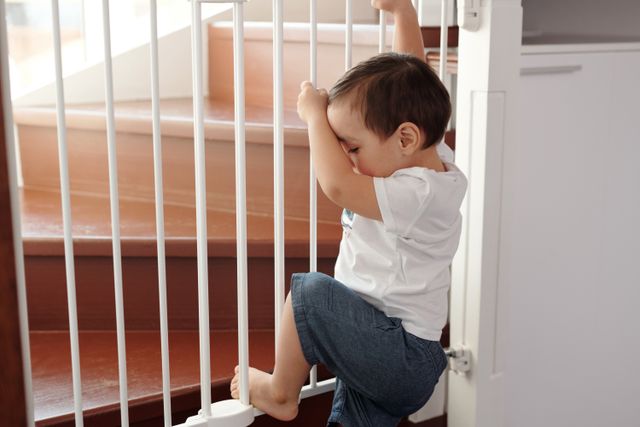
Childproofing reduces common home hazards while children crawl, climb, and explore — especially falls involving beds, floors, stairs, and living room furniture — not a home that is entirely hazard-free. Injury estimates associated with household products can help you decide where to focus first; they cannot prove that a product caused an injury on its own. This page is a practical checklist, not medical care. If your child has been injured or you have specific health concerns, your pediatrician is the right person to ask.
What Injury Patterns Show (Kids, Home)
SafeCheck's NEISS-based estimates for young children consistently rank beds and bed frames, floors and flooring, stairs, sofas, tables, and chairs among the leading home-related injury categories. That pattern is intuitive once you picture how toddlers use a room: they climb onto beds and sofas, pull up on tables, trip over floor clutter, and treat staircases as a challenge.
A few things to keep in mind when you see these estimates:
- They describe injuries associated with a product — the product was present or in use when the injury happened. That is not the same as the product causing the injury.
- They are national estimates from a probability sample of U.S. hospital emergency departments, weighted to represent the whole country.
- They do not tell you your child's individual risk. They help you rank broad categories, not predict what will happen in your home.
Activity-related categories such as football, bicycles, trampolines, and soccer also appear in the data for older children, but they are outside the scope of this whole-home page.
If you want to understand how these numbers are produced and what "associated with" really means, read What Is NEISS? How to Read CPSC Product Injury Numbers.
Whole-Home Priorities (Do First)
If you only have an hour this weekend, spend it on these five items. They address the hazard patterns that show up most often in the data for young children:
- Stairs and gates. Install a hardware-mounted safety gate at the top of stairs and a second gate at the bottom. Keep stairs clear of shoes, bags, and toys.
- Floors, clutter, and rugs. Pick up small objects from walkways, secure loose rug edges with double-sided tape or a non-slip pad, and coil cords away from paths children use daily.
- Beds and falls from furniture. Consider guard rails for toddler beds, keep mattresses low to the floor where practical, and avoid placing beds or sofas directly below windows.
- Windows. Install window guards or stops so windows cannot open wide enough for a child to fall through. Screens keep bugs out — they do not keep children in.
- Cords and outlets. Use outlet covers, secure cords behind furniture, and keep blind and curtain cords out of reach. The CPSC's Childproofing Your Home guide covers these basics in detail.
Anchor furniture to the wall
Dressers, bookshelves, and TVs can tip when children climb. Anti-tip straps or brackets cost little and take minutes to install. This is one of the highest-value steps in the whole list.
Room-by-Room Checklist
Nursery / Bedroom
- Anchor dressers and shelves; keep heavy items on lower shelves.
- Position the crib or bed away from windows, cords, and wall-mounted shelves.
- Use a toddler rail once your child transitions out of the crib, or place the mattress on the floor.
- Keep nightlights and monitors' cords well away from the sleep area.
- Check under the bed and behind furniture for small objects that could be choking hazards.
Living Room
- Anchor the TV to the wall or place it on a low, stable stand.
- Check sofas and armchairs for sharp corners at toddler head height; use corner guards where needed.
- Keep coffee-table edges padded and clear of hard or hot items.
- Secure bookshelves and storage units with anti-tip straps.
- Route cords along walls, behind furniture, or inside cord covers.
Kitchen
- Use stove back burners when possible and turn pot handles inward.
- Store knives, cleaning supplies, and medications in high or locked cabinets.
- Secure the dishwasher lock — it holds knives and detergent pods.
- Keep a clear path from the kitchen to the rest of the house so you can carry hot items without tripping.
Bathroom
- Set water heater temperature below 120°F (49°C) to prevent scalds.
- Use a non-slip mat in the tub and a non-slip rug on the floor.
- Store medications, razors, and cosmetics out of reach or in a locked cabinet.
- Never leave a young child alone in the tub, even for a moment.
Stairs / Hallways
- Hardware-mounted gates at the top of stairs; pressure-mounted or hardware-mounted gates at the bottom.
- Teach children to hold the handrail as soon as they can walk stairs independently.
- Keep hallways and stair landings clear of shoes, bags, and toys.
- Check that stair carpeting or runners are tightly secured with no curled edges.
Garage / Outdoors (Brief)
- Keep tools, chemicals, and automotive supplies locked or on high shelves.
- Check that garage door auto-reverse works; test it monthly.
- Store garden equipment and hoses out of walkways.
- Supervise children near driveways and streets — visibility from a car is limited for young children.
Nursery Sleep Is Separate
This page covers the whole home — furniture, floors, stairs, and the spaces between rooms. Safe infant sleep has its own focused set of rules: a firm flat surface, nothing soft in the crib, and the baby on their back. If you are setting up a nursery or transitioning your baby to a crib, read Crib Safety Checklist: Safer Sleep for Babies for that specific guidance.
How SafeCheck Home Fits In
Working through a room-by-room checklist is easier when you can see injury context for the products in each space. SafeCheck Home lets families build room checklists and search product categories to explore what the NEISS data says — in plain language, with caveats about what the numbers mean. Core features are free, and our privacy policy explains how we handle data.
Related Guides
- What Is NEISS? How to Read CPSC Product Injury Numbers — understand the data behind product safety.
- Crib Safety Checklist: Safer Sleep for Babies — a focused safe-sleep guide for the nursery.
- High Chair Safety Checklist — safer mealtimes for babies & toddlers.
- Baby Gate Safety Checklist — install gates correctly and avoid crossing over.
- Bathroom Safety for Seniors — a fall-prevention checklist for older adults in your household.
- Stroller & Carrier Safety Checklist — safer outings with baby.
- Is SafeCheck Home Free? — pricing, data collection, and who the app is for.
- SafeCheck Home — explore the app's full feature set.
Frequently Asked Questions
Where should I start with childproofing?
Start with the hazards that cause the most falls and injuries for young children: stairs, floors, beds, and living room furniture. Install safety gates at the top and bottom of stairs, clear walkways of clutter and tripping hazards, anchor furniture to the wall, and add window guards or stops. Then move room by room through the checklist above.
Why do beds, floors, and stairs matter so much?
SafeCheck's NEISS-based estimates for young children consistently rank beds, floors, stairs, sofas, tables, and chairs among the leading home-related injury categories. These are the surfaces children climb, fall from, and trip over most often. The estimates describe injuries associated with these products — they do not by themselves prove the product caused each injury.
Is a safety gate enough for stairs?
A hardware-mounted gate at the top of stairs is the most important single step, but it works best as part of a set of habits: keeping stairs clear of clutter, teaching children to hold the handrail, and supervising young children near stairways. Pressure-mounted gates are not recommended at the top of stairs because a child's weight can push them loose.
How is this different from crib safe-sleep guidance?
This page covers whole-home hazards — falls from furniture, tripping on floors, climbing stairs — for mobile babies and toddlers. Crib safe-sleep guidance focuses on the sleep space itself: a firm flat surface, nothing soft in the crib, and the baby on their back. For that focused topic, see our Crib Safety Checklist.
How does SafeCheck Home help?
SafeCheck Home lets families build room-by-room safety checklists and search product categories to explore injury context in plain language. Core features are free.
Sources
- CPSC — Childproofing Your Home
- SafeCheck Home — What Is NEISS?
- SafeCheck Home — Crib Safety Checklist
- Stroller & Carrier Safety Checklist — safer outings with baby.
- Is SafeCheck Home Free? — pricing, data collection, and who the app is for.
- SafeCheck Home
This article is for informational purposes only. It is not medical advice and is not a substitute for professional guidance from your pediatrician. Always follow the instructions that come with your products and consult qualified healthcare providers for your child's specific health needs. Childproofing reduces common hazards — it does not make a home completely risk-free.