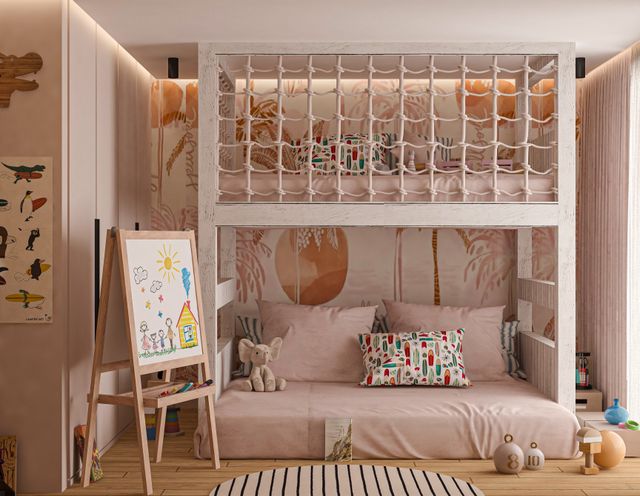
Check three layers of kids' bed safety: a clear, low fall zone beside a toddler or twin bed; CPSC-aligned bunk rules (no children under 6 on the upper bunk, guardrails on both sides with tops at least 5 inches above the mattress, ladder only, no horseplay); and portable bed-rail fit — typically for children about 2 to 5 who can get in and out alone, never for infants under 2, and never with a dangerous gap. Practical educational guidance, not medical care. Scenario clusters below are mixed-age pattern views from SafeCheck Home's Top5 export — useful for prioritizing bedroom checks, not for proving a bed caused an injury or for reading cluster counts as a simple percent of all kids bed injuries. Method caveats: What Is NEISS? For infant sleep itself, start with our crib checklist.
Why beds matter in kids' home injury patterns
Children use beds every day, often while sleepy, learning to climb, or moving in a dim room. A periodic check matters because mattress fit, rail height, the nearby floor, and the night-time route all shape what happens after a fall.
In SafeCheck Home's weighted NEISS view of kids' home product categories, the category BEDS OR BEDFRAMES, OTHER OR NOT SPECIFIED ranked first. That view was based on 8,884 sample hospital cases and produced a national estimate of about 229,118 emergency department-treated injuries, with a 1.9% admission rate. These figures come from a probability sample that is statistically weighted; they are not raw hospital totals or an official CPSC ranking.
More importantly, injuries associated with beds or bedframes were recorded together with those products — they were not necessarily caused by them. A high category estimate does not prove that a particular bed was defective. Use it to decide what to check first, not as a diagnosis. Read how hospital cases become national estimates.
Injury patterns — how bed falls show up (cluster view)
The five rows below group recurring ED narratives from SafeCheck Home's Top5 pattern export for beds/bedframes (product code 4076). They prioritize bedroom checks; they do not rank beds by danger or diagnose injuries.
| Audience focus | Injury | What happens | Object chain | Cluster sample | Cluster national estimate | Prevention tip |
|---|---|---|---|---|---|---|
| Elderly-weighted (soft bridge) | Head injury (internal / laceration / contusion) | Fall out of / while leaving bed; head hits floor or furniture | Bed + Floor | 6,044 | ~194,090 | See senior bedroom fall prevention; this is not a kids bunk essay. |
| Mixed (soft infant note) | No injury / minor unspecified | Fall out of bed onto floor/pad; often minor/none | Bed + Floor | 2,330 | ~97,469 | Use a low bed and clear landing for toddlers; keep infants on a crib — see crib safety. |
| Elderly-weighted (soft) | Back pain / hip pain | Strain rising from bed | Bed | 1,429 | ~63,716 | Focus on stable senior bedroom and chair-transfer habits. |
| Kids (priority) | Facial laceration | Fall/slide off bed; face hits frame/headboard | Bed + Bed frame/Headboard | 1,215 | ~39,631 | Keep the bed low and edges clear; use age-appropriate rails with the CPSC portable-rail caveats on this page. |
| Elderly-weighted (soft — not kids primary) | Hip fracture | Elderly fall from/while leaving bed; hip fracture | Bed + Floor | 739 | ~33,116 | Bridge only to senior bedroom habits. |
How to read this table: These figures are scenario cluster sample counts and national estimates from SafeCheck Home's Top5 pattern export for beds/bedframes — a cluster / pattern view, not proof of cause and not a simple percentage of all kids bed-associated injuries. Kids and seniors beds Top5 lists are the same mixed-age list; Audience focus filters which habits this page emphasizes. Cluster samples may exceed the kids category sample (8,884) because clusters group mixed-age narratives. Always distinguish category sample / national estimate (8,884 / ~229,118) from cluster sample / cluster estimate. Associated with ≠ caused by. Educational only; not medical advice.
Everyday bed & toddler-bed fall checklist
If a child has started climbing out of a crib, many families move to a low toddler bed or mattress on the floor. The goal is to remove predictable ways a short fall can become a long one.
- Choose the sleep surface for the child's current abilities. When crib climbing begins, ask whether a low toddler bed or floor-level mattress fits the child and the manufacturer's use guidance.
- Make the landing zone boring. Keep rugs, toys, hard storage bins, and furniture corners away from the immediate bedside where practical.
- Use a stable frame and a matched mattress. Check that the mattress fits the bed without gaps, does not create an unexpected height difference, and cannot shift on an insecure frame.
- Move hazards away from the sleep area. Keep cords, blinds, fans, heaters, and window openings out of a child's climb-and-fall path; follow manufacturer placement instructions.
- Light the night-time route. A dim nightlight between bed, hallway, and bathroom can reduce groping in the dark without disrupting sleep.
- Recheck after changes. A new mattress, rearranged furniture, or a newly mobile sibling can change the fall zone.
Infant safe sleep has different priorities: a firm flat surface, nothing soft in the crib, and the baby on their back. Keep crib safety separate from this toddler and school-age bed checklist.
Bunk bed checklist (CPSC-aligned)
Bunk beds introduce height, ladders, guardrails, and social pressure. Treat the manufacturer's instructions as part of the product, and follow CPSC's bunk-bed guidance.
- Keep children under 6 off the upper bunk. Required bunk-bed instructions warn not to allow them to use it. A younger sibling can use the lower bunk or a separate low bed.
- Use guardrails on both sides of the upper bunk. Keep wall-side and opposite-ladder rails continuous and check that fasteners remain secure.
- Check rail height with the mattress you actually use. CPSC requirements call for guardrail tops at least 5 inches above the mattress top when the manufacturer's thickest recommended mattress is used. A too-thick mattress can defeat that height.
- Use the ladder. Do not climb on the ends or frame, and avoid jumping from the upper bunk.
- Allow one person on the upper bunk. Extra weight and roughhousing increase stress on the structure and the chance of a fall.
- Keep play away from bunks. No horseplay on or under the bed; check that ceiling fans, lights, shelves, or sloped ceilings are not in the sitting path.
- Inspect after moves and cleaning. Recheck bolts, slats, rails, ladder treads, and mattress fit after assembly, relocation, or a mattress change.
- Check the specific model before reuse. Search SaferProducts.gov and CPSC Recalls for the product you own.
School and camp bunks may follow different ownership, maintenance, and institutional rules. If your child sleeps away from home, ask how bunks are set up and maintained, and send any needed sleep aid from home only if the facility permits it.
Toddler / children's portable bed rails
A portable rail can help a child who already gets in and out of bed unassisted feel the edge of the mattress, but fit matters more than the rail itself. CPSC's guidance and the federal standard for children's portable bed rails focus on age, installation, and entrapment gaps.
- Match the age and ability. Children's portable bed rails are typically intended for children about 2 to 5 years old who can get in and out of bed unassisted. Do not use them for infants under 2.
- Install for the exact bed and mattress. Follow the manufacturer's instructions and create no dangerous gap between the rail and mattress, headboard, or footboard.
- Recheck after every mattress change. A different thickness or firmness can turn a snug fit into a gap or lower the effective rail height.
- Do not use a rail as a crib substitute. A crib has its own standard and use limits; a portable rail is not a way to extend crib use.
- Prefer a low toddler bed when appropriate. If the main concern is rolling out during a crib-to-bed transition, ask whether a low toddler bed or floor mattress meets the need with less hardware complexity.
- Stop using damaged or ill-fitting rails. Missing parts, bent mounts, or a rail that rocks free with normal movement is not a helpful barrier.
Crib vs toddler bed — a short bridge
Our Crib Safety Checklist focuses on infant safe sleep: alone, on the back, on a firm flat surface, with bare as best. This page starts after that stage, when climbing, bed rails, and bunk access become the practical questions. Families often need both pages at different ages — sometimes for two children in the same house.
How SafeCheck Home fits in
SafeCheck Home helps families turn injury context into practical, age-appropriate checks around the home.
- Category search — explore NEISS-based views for 1,000+ CPSC product categories, with caveats about association versus causation.
- Room-by-room checklists — work through bedrooms, hallways, and other home areas in small steps.
- Age-tailored alerts — adapt reminders for children and older adults as your family's needs change.
Core features are free to download and use. SafeCheck Home complements — but does not replace — official CPSC rules, product instructions, or recall searches. Our free and privacy guide explains who the app is for, and the Privacy Policy explains data handling.
Related guides
- Crib Safety Checklist: Safer Sleep for Babies — infant sleep, crib hardware, and nursery setup.
- Childproofing Checklist — room-by-room childproofing for your home.
- Baby Gate Safety Checklist — install gates correctly and avoid crossing over.
- Backyard Trampoline Safety — AAP caution plus one-jumper CPSC rules.
- Furniture Tip-Over Prevention — anchor dressers and TVs near bedroom and living areas.
- Coffee Table Edge Safety — soften edges around child play and walking areas.
- Sofa & Couch Fall Prevention — never-alone rules for babies and supervised cushion play.
- Hard Floor Fall Prevention — clear paths, secure rugs, and safer play mats.
- What Is NEISS? — hospital samples, national estimates, and data caveats.
- Is SafeCheck Home Free? — pricing, data collection, and who the app is for.
- Bedroom Fall Prevention for Older Adults — senior bed transfers and adult portable bed-rail caution.
- SafeCheck Home — product category search and room-by-room checklists.
Frequently asked questions
Can children under 6 use the upper bunk?
No. Required bunk-bed instructions warn: do not allow children under 6 years of age to use the upper bunk. Keep younger kids on the lower bunk or a low toddler bed.
How high should bunk guardrails be?
CPSC requirements: tops of the guardrails no less than 5 inches above the top of the mattress when the manufacturer's thickest recommended mattress is used. Use guardrails on both sides of the upper bunk.
When is a children's portable bed rail appropriate?
Typically for children about 2 to 5 years old who can get in and out of bed unassisted. Do not use for children under 2. Install so there is no dangerous gap with the mattress, and follow the manufacturer's instructions.
Can I treat bed scenario cluster numbers as a percent of all kids bed injuries?
No. Cluster counts are mixed-age pattern groupings. Always label sample vs cluster vs national estimate; associated with ≠ caused by. Child rows such as face-to-frame falls inform toddler/bunk habits; elderly rows belong on the senior guide.
How is this different from the crib safety checklist?
The crib page focuses on infant safe sleep (alone, on the back, firm flat surface, bare is best). This page covers falls, bunks, and toddler/portable rails after the crib stage. Families often need both guides at different ages.
Sources
- CPSC — Bunk Beds FAQ: upper-bunk age warning, guardrails, mattress height, ladder use, and horseplay.
- CPSC — Children's Portable Bed Rails FAQ: appropriate ages, gaps, installation, and mattress changes.
- CPSC — New Federal Standard for Portable Bed Rails: age and gap warnings behind the standard.
- SaferProducts.gov and CPSC Recalls: check a specific model you own.
- SafeCheck Home — What Is NEISS?: sampling, weighting, and “associated with” versus “caused by.”
- SafeCheck Home — Crib Safety Checklist: infant safe sleep and nursery setup.
- SafeCheck Home's Top5 NEISS pattern export for BEDS OR BEDFRAMES, OTHER OR NOT SPECIFIED (product code 4076), checked on November 3, 2026. These figures are mixed-age scenario clusters and estimates, not age-slice totals or official CPSC ranking.
- SafeCheck Home's internal weighted NEISS view for BEDS OR BEDFRAMES, OTHER OR NOT SPECIFIED, checked on November 2, 2026. The 8,884 sample cases, about 229,118 estimated ED-treated injuries, and 1.9% admission rate are category-level figures from that view, not an official CPSC ranking and not pattern-level counts.
This article is for informational purposes only. It is not medical advice and is not a substitute for professional guidance from your pediatrician. Always follow the instructions that come with your products and consult qualified healthcare providers for your child's specific health needs. Good setup reduces selected hazards — it does not make a home completely risk-free.